
What We Use (And why we rejected everything else)
-

Kansui
Learn MoreThe traditional alkaline water used to give ramen its bite and chew. No food coloring here!
-
-
Corn Fiber
Learn MoreThe only prebiotic fiber that passed all our tests: lasting fullness, smooth mornings, zero gas or bloat.
-


Wheat
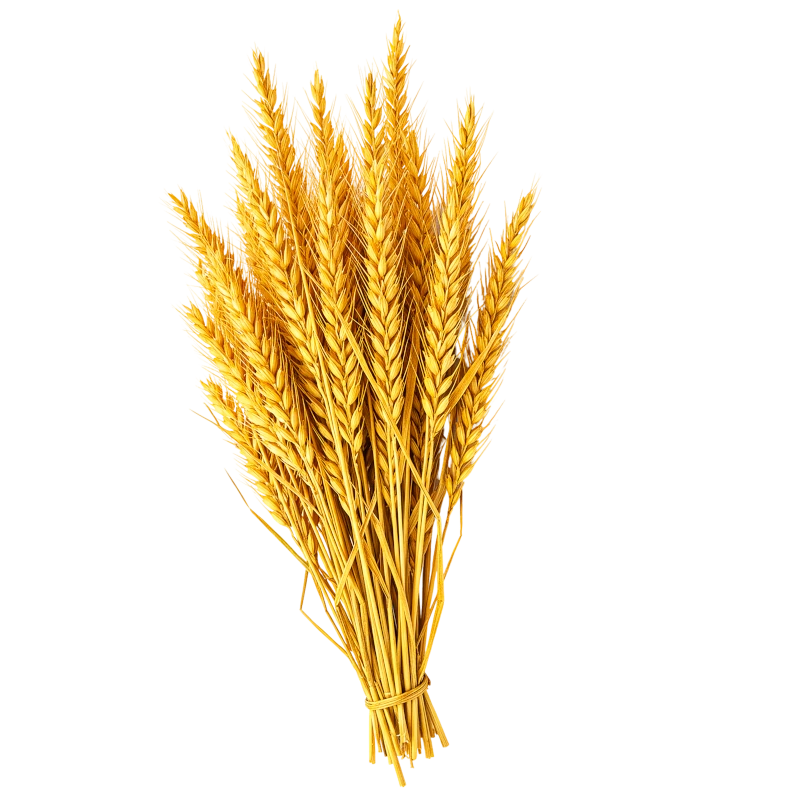
If you want ramen, you gotta have wheat.
Classic ramen chew and flavor can ONLY be done with gluten. The specific way those protein structures align and react, something you just can't fake with substitutes.
Wheat contains two important, specific proteins:
Gliadin: This protein lets dough streeeeeeetch, providing extensibility, or stretching without breaking.
Glutenin: Good noodles have a bounce and chew to them, and that's just what glutenin does! It bounces back when pushed, instead of some other noodle types that behave more like clay when you bite into it.
Together they create viscoelasticity, which is a fancy word for "acts like noodles."
When you add water and start working the dough, these two come together to form gluten. Gluten is a protein network that holds everything together while you're eating it, and it's what gives you that satisfying resistance when you bite down.
In fact, this strong protein network is one of the reasons why we couldn't find anyone to help us make the noodles when we first started. We didn't have any experience building or running a factory, so we wanted to get a co-packer, or an existing factory, to help us make it! But everyone told us that high protein noodles would be too difficult to make, and would ruin machinery, so they wouldn't do it, and said that we'd never be able to do it either.
So out of spite, we said, "skill issue," and built our own tiny one. Despite it being significantly more difficult, we also use rollers that slowly thin our dough out, aligning the gluten and protein networks for optimal chew and mouthfeel. This takes longer, is WAY more difficult than using extruders, which just forces the dough through holes in a metal plate to make noodles. If you've ever kneaded dough before, and saw how it shrinks after you stretch it(hello, glutenin and gliadin!), then imagine that happening... but between high pressure steel rollers.
Rolling is slow and gradual, much slower than an extrusion process. Each pass through the rollers aligns the gluten structures more precisely. The proteins line up parallel, creating that specific bite and texture that shows high quality noodles. But that same process means that if not managed well, it shrinks, and SNAPS, and then we need to stop the machines, clean things out, and then start the process of thinning it all over again.
Amethyst, our noodle machine, is temperamental like that sometimes.
We started with an Italian pasta machine before we moved to Amethyst (that's a whole story for another day). But the principle stayed the same, getting proper gluten alignment through patient, methodical rolling.
Wheat proteins react with kansui in ways other flours don't, because that alkaline environment changes how the gluten behaves, creating the firm, springy texture that defines ramen.

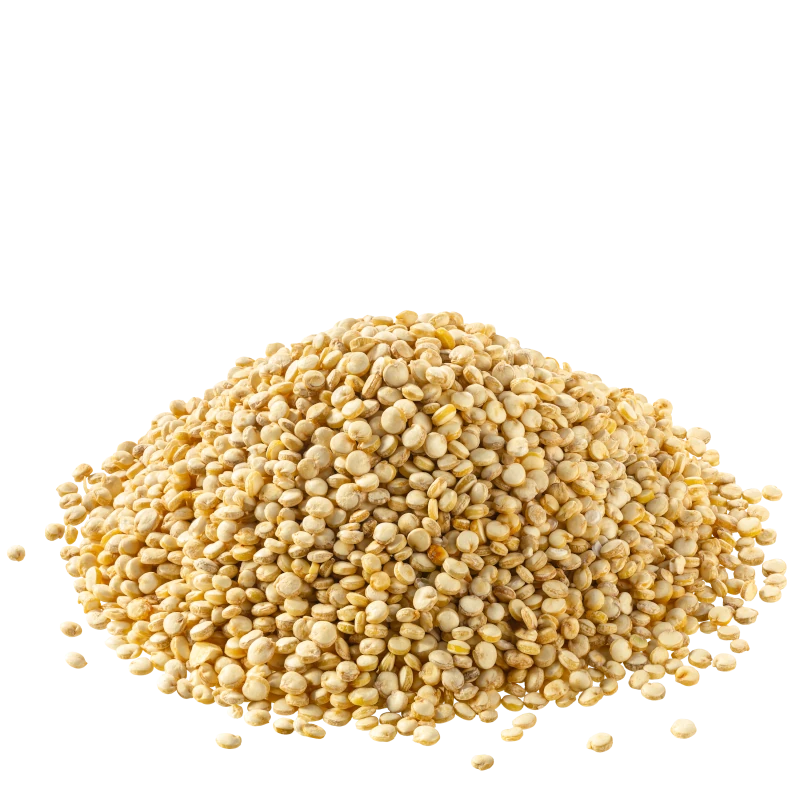
Quinoa
First, let’s talk about complete proteins. Proteins are made out of amino acids. You can think of it like legos. When you eat proteins, your body breaks it down into individual legos again, giving you the building blocks to do whatever you need(okay this is a major simplification don’t get mad at me science people).
But just like how you can’t make a lego car without lego wheels, so, too, does your body need all of the essential amino acids to keep building muscle and giving you energy! While there are 20 amino acids, there’s 9 that our body can’t make. And thing is...
Wheat makes great ramen. Wheat does not make complete protein.
Specifically, wheat is low in L-lysine, one of the essential amino acids your body can't make itself. So we needed something high in lysine to fill that gap.
We tested everything: Amaranth, buckwheat, various legume powders, protein isolates. All things that, if you go on nutrition blogs, say are "high in lysine."
The results?
- Amaranth: Like eating noodles made of sand
- Buckwheat: Actually worked okay, but a little gritty, and reduces the chew we worked so hard on
- Plant protein*: Chalky, grassy, gritty-- all the worst parts combined. Except, we did end up using a certain type of pea protein in our Pro+, but that’s a story for another day
- Soybean Flour: Allergen, also the fats shorten gluten strands(ever wonder why butter/margarine is called ‘shortening’?)
We tested a LOT of other things too... Then we found quinoa.
Quinoa is a unique plant. It’s one of the very few plant proteins in the world that’s a complete protein on its own, containing all the essential amino acids, including plenty of lysine. But here's what nobody talks about: quinoa has its own structural matrix that actually works with wheat.
Better yet, the texture of quinoa flour is very similar to regular wheat flour, so there weren’t any issues in blending it, or grittiness!
When you combine wheat and quinoa proteins, the amino acid profile becomes more bioavailable than either protein alone. It's called protein complementation - the amino acids work together to improve absorption and utilization.
Most alternative flours fight against gluten formation. Quinoa cooperates. Its proteins complement wheat's proteins instead of competing with them.
So Quinoa has:
All 9 essential amino acids ✓
High lysine content (fixes wheat's gap) ✓
Good Fiber source ✓
Doesn’t make noodles gritty ✓
But it did have one problem... Something called saponins.
They’re the bitter, herbal flavor in quinoa that a lot of people don’t like. Not great for noodles. But turns out... they’re also more heat sensitive... so if you pre-cook the flour a bit, through heat treating, then it gets rid of that flavor!
...mostly, anyway. The other problem with heat treating is that it, well, cooks the quinoa proteins, making them not work as well to help bind the noodle together. Still, it worked well enough, so we started our first versions with these.
But then, we found something: Canada.
See, there’s a lot of different kinds of quinoa out there. We’d primarily been using a south american varietal, well known for its nutty flavor, umami, but also containing a stronger herbal flavor. Because we wanted a more neutral flavor in our noodle, this actually went against what we wanted, but it was what we’d been recommended, as it was the “best quality.”
Turns out... quality is subjective.
Canada has its own quinoa growing, and is generally considered not as good in quality. See, reason for that is... it’s more neutral tasting... a little starchier... and the color is light...
...
Or, in other words, everything we were looking for.
But the story’s not quite done there. Even with quinoa's lysine content, we added extra L-lysine to fill out the gaps in amino acid profiles that wheat was lacking in to make extra sure the amino acid profile was truly complete. No gaps, no "close enough."
Bonus: Quinoa also brings a bunch of fiber!
Most brands add quinoa because it sounds healthy. We add quinoa because it makes sense for our noodle design.Except... the high protein actually caused a completely different problem. One that we had to rely on corn fiber to solve.

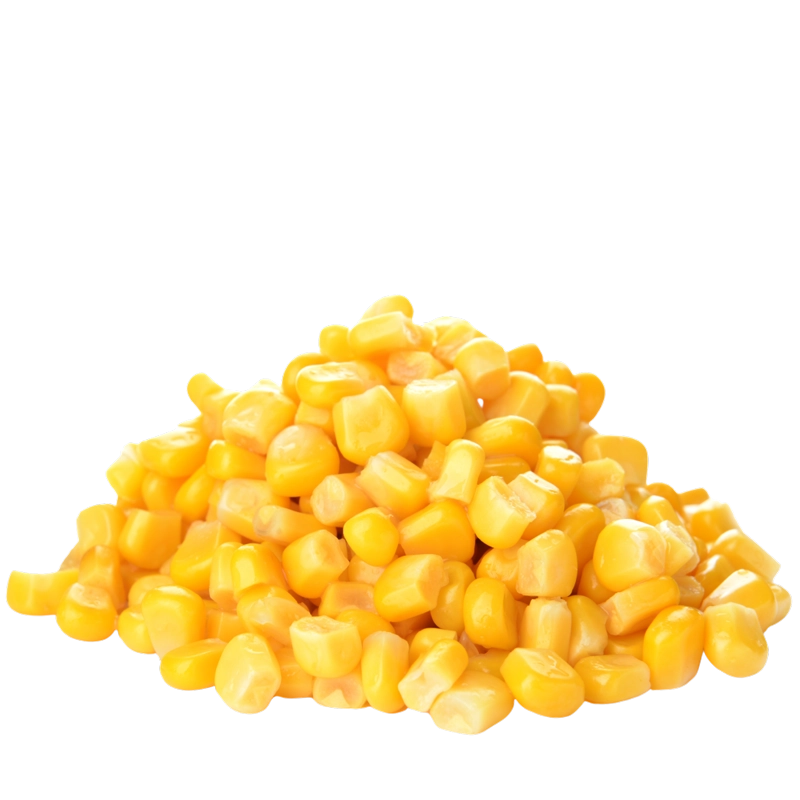
Corn Fiber
6 grams of prebiotic fiber that works with your digestive system instead of against it, for sustained energy, stable blood sugar, no afternoon crash, and your beneficial gut bacteria get properly fed and produce the serotonin they need to.
Another critique of normal noodles, nutritionally speaking, is they don’t have fiber. You get hungry real fast afterwards.
But, in another twist, the high protein in our noodles also created a huge problem of its own... which we'll get to later.
We tested every fiber source you can think of:
- Guar gum - made the broth the texture of snot. Yum.
- Chicory root/Inulin - poorly digested by a lot of people(like me). Causes gas, bloating, biological warfare in small rooms.
- Oat fiber - actually this one worked alright but it was REALLY EXPENSIVE (and still kinda gritty)
- Psyllium husk - Perfect for all our needs! Except... it can kill us. Not you though. More on that later.
See... The thing about fiber is that it affects everyone differently. Very differently. But fiber, and digestive health, is incredibly important to our well being, and more research every day comes out on how gut health affects everything from energy levels, to mood, to a lot of other stuff.
But... if you eat too much fiber, especially of the wrong kinds at once, if you’re not used to fiber...
You’ll turn into a hot air balloon, and just as much gas. You will not be able to stay indoors. Everyone will make excuses to not be around you. And you’ll be running to the bathroom... a lot.
Testing all these fibers, then... was probably one of the worst parts of this. Especially for me, who admittedly should eat more fiber, and thus was also the most affected by it.
Which is also why there’s a moderate amount of fiber in our noodles, and not more-- simply, we need to balance it so that everyone, no matter how much fiber they normally consume, can eat it, get the benefits, and not have an area of effect status that keeps everyone away from them!
At first, psyllium husk, finely powdered, seemed to be a great solution. It fit all the things we need, fulfilled all the conditions like helping our noodles not take twenty minutes to cook!
...Oh. I forgot to talk about that huh
So, here’s the thing about protein. Stick a steak in water, and stick a piece of bread in water... which one gets soggy first?
The steak is made out of mostly protein, and so absorbs water slowly. Keep a steak in water long enough and it’ll also get bloated and watery, but the bread, made out of mostly carbohydrates, will get soggy first.
Same thing with noodles. High protein = slow water absorption, and our “instant” ramen became... not so instant. It took an INCREDIBLY long time to boil, 15 minutes on average.
See, normal instant ramen is “instant” for two reasons. It has a lot more carbohydrates, which hydrates faster for the reason we talked about, but it’s also deep fried, a method created by the inventor of instant noodles, momofuku ando. When you deep fry noodles, the steam from the water inside the noodles explodes outwards, creating little microscopic holes that water can get into later, hydrating it faster!
Of course, the trouble is... we don’t deep fry our noodles. At the time, we air dried them. That meant that it had all the cooking time of air dried noodles... plus the protein to make it even worse.
Ouch.
The thing about fiber though, is that fiber IS a carbohydrate, just one that your body can’t digest. It’s a broad category, and generally consists of two general types: Soluble and insoluble.
Soluble just means it can dissolve in water, and insoluble means it won’t dissolve in water. Simple.
Besides the health benefits, soluble fiber has another benefit: IT SUCKS UP WATER FASTER.
Which means, put into our ramen... we get a double whammy of benefits, both for you, who’s eating it, and you, who doesn’t have to wait as long for it to boil. Still, the biggest thing that made our noodles be able to hydrate even faster is our proprietary microwave dehydration method, which is so fast, so innovative, that companies worth hundreds of millions of dollars have tried to break into our facility to find out its secrets. But that’s a story for another day.
And so, corn fiber won.
It was the only one that delivered prebiotic benefits without the kind of digestive rebellion that can clear a room. Your gut bacteria get fed properly, you don't spend the afternoon uncomfortable, and the noodles maintain their texture.
And back to psyllium husk... Yeah, it's great for digestive health. But... It's also documented to potentially create lethal sudden allergies with enough airborne exposure during manufacturing... And being that we're not interested in us or other staff keeling over suddenly... we decided against it.
Corn fiber is a soluble prebiotic fiber that feeds beneficial gut bacteria without feeding the problematic ones that cause gas and bloating. Your microbiome stays balanced, your energy stays stable, and you don't regret eating.
Your beneficial gut bacteria (Bifidobacterium, Lactobacillus) can break down corn fiber into short-chain fatty acids. These SCFAs reduce inflammation, improve mineral absorption, and support gut barrier function.
Your problematic bacteria can't digest it efficiently. So the good guys get fed, the bad guys get crowded out, and your gut stays balanced.
Most brands use whatever fiber is cheapest... but, we use corn fiber because we refuse to make you choose between nutrition and comfort.

Kansui
Kansui is potassium carbonate and sodium carbonate mixed with water... which sounds weird, and tastes weird(actually-- just really bad, with T-Pain saying it tasted like the devil's behind when he tasted it at our facility). Most people have never heard of it.
We use it because it's the secret ingredient to good noodles.
There is no absolutely no other way to get authentic ramen bite and chew. You can't fake it with baking soda, you can't approximate it with other alkaline salts, you can't shortcut it with food coloring to make it look like you did the work, which... is what a lot of companies do instead of actually using this.
See, the alkaline environment (pH around 9-10) changes how wheat proteins behave, and instead of the soft, extensible gluten network you get in bread, you get firm, springy noodle texture that holds up in hot broth.
Kansui also reacts with flavonoids in wheat flour to create that distinctive yellow color, which, interestingly enough, is something we're not entirely sure why it happens, just that it does.
Without it, our noodles just wouldn't have the same chew and bounce that good noodles should have!